Pages

Saturday, August 04, 2007

August 4: Top 100 Day


Today is the the anniversary of the introduction of Billboard magazine's Hot 100 chart. The first number one song on the chart was Ricky Nelson's "Poor Little Fool."

Prior to August 4, 1958, Billboard had separate charts for Most Played By Jockeys, Best Sellers in Stores, and Most Played in Juke Boxes. The new Hot 100 list combined the Best Sellers and the Most Played By Jockeys lists into a single chart. Because Juke Boxes were becoming less popular, their numbers were not included.

The linguistic equivalent of Billboard's Hot 100 would have to be Word Spy's Top 100 Words . Created by technical writer Paul McFedries, Word Spy is a web site devoted to neologisms. Neologisms are new words -- words that have appeared in print multiple times, but that are not in the dictionary.

Word Spy gives the arm chair linguist a peek behind the lexical curtain. Visiting this web site is a little like watching a preseason football practice: you get to see all the players (words) on the field, but you're not sure which ones will make the final cut. In the case of neologisms, the final cut is making it into the dictionary. The lexicographers at the Oxford English Dictionary do their work behind the scenes, and most neologisms have the life span of the common house fly. In contrast, Word Spy makes lexicography democratic: you get to see all the words, it's free, and McFedries even accepts reader submissions.

Here are a couple of examples for neologisms from Word Spy:

aireoke (air.ee.OH.kee) n. Playing air guitar and singing to prerecorded music; playing air guitar in a public performance. Also: air-eoke. [Blend of air guitar and karaoke.]

Manilow method n. The discouragement of loitering in public places by broadcasting music that is offensive to young people, particularly the songs of singer Barry Manilow.

In addition to words and definitions, Word Spy also provides pronunciations, citations, and notes on each word. WARNING: Reading this site can become addictive! (2)

Today's Challenge: Brave New Words
See if you can match up the 8 neologisms from Word Spy with the 8 definitions numbered below.

freegan
buzzword bingo
godcasting
NOPE
Google bombing
Drink the Kool-Aid
fauxhawk
male answer syndrome

1. n. A person or attitude that opposes all real estate development or other projects that would harm the environment or reduce property values.

2. n. A hairstyle in which a strip of hair across the top of the head is longer and higher than the hair on the remainder of the head.

3. n. A person, usually a vegan, who consumes only food that is obtained by foraging, most often in the garbage of restaurants, grocery stores, and other retailers.

4. v. To become a firm believer in something; to accept an argument or philosophy wholeheartedly or blindly.

5. n. Setting up a large number of Web pages with links that point to a specific Web site so that the site will appear near the top of a Google search when users enter the link text.

6. n. The tendency for some men to answer a question even when they don't know the answer.

7. n. A word game played during corporate meetings. Players are issued bingo-like cards with lists of buzzwords such as paradigm and proactive. Players check off these words as they come up in the meeting, and the first to fill in a "line" of words is the winner.

8. pp. Podcasting an audio feed with a religious message (2).

Quote of the Day: The genius of democracies is seen not only in the great number of new words introduced but even more in the new ideas they express. --Alexis de Tocqueville

Answers: 1. NOPE: (Not On Planet Earth) 2. fauxhawk 3. freegan 4. Drink the Kool-Aid5. Google bombing 6. male answer syndrome 7. buzzword bingo 8. godcasting

1 - This Day in History - Entertainment - August 4. The History Channel
http://www.historychannel.com/tdih/tdih.jsp?month=10272960&day=10272969&cat=entertainment

2. wordspy.com
http://www.wordspy.com/topwords.asp

Friday, August 03, 2007

August 3: Idiot Letter Day


On this date in 1993, one of the most hilarious missives in the history of letter writing was sent to an American corporation. Before we look at the letter, let's look at the history of how it came to be written.

In July of 1993 Paul Rosa received a piece of junk mail that changed his life. It was a brief letter from Pizza Hut's delivery unit saying that they had not received an order from Rosa's address in a long time. The letter from the Vice-president of Pizza Hut marketing reminded Rosa of the quality, variety, and value of Pizza Hut pizza. It might have been just another piece of junk mail, but one line in the letter resonated with Rosa. It said: "You see, you're the kind of customer we'd like to see more often." Rosa wrote back a letter to Pizza Hut asking "What kind of customer wouldn't you like to see more often?"

This first letter started a letter-writing campaign that went on for months, covering more than 100 different corporations. Rosa's mission statement was: Since American corporations are treating their customers like idiots, "while reaching for their wallets," I am going to get even by writing them letters in which I act like an idiot.

The letters from Rosa's "kamikaze consumer crusade" were published in 1995 in the book Idiot Letters: One Man's Relentless Assault on Corporate America.

The following is the letter that Rosa sent to Oil-Dri Corporation of America the makers of Cat's Pride Premium Cat Litter on August 3, 1993.

Dear Cat Lovers,

For the first ten years of my cat's life, it was a living hell trying to get her to use her litter box! Whenever she would get the call from nature (night or day), she would howl until someone would let her out. Needless to say, this made my wife (Vicki) and I extremely angry, as we were often woken from a sound slumber, or interrupted during...Matlock. We tried many litter boxes (circular, octagonal, etc.) and brands of cat litter, but she simply refused to cooperate. We were actually tempted to give her away, but simply love her too much -- she was a gift from my mother (Irene).

This all changed a few months ago when, at wits' end, we tried Cat's Pride on the suggestion of a friend (Max). Well, we were delighted, nay ecstatic, when Jesse - without hesitation - stepped into the litter box and "unloaded." After ten years of treating her box like it was filled with glass chips, we finally found something she likes! And her attitude hasn't changed! Since that day she has ventured to the basement on a daily basis to fulfill her duty. The increased cleaning chores on our part are quite acceptable, considering the time now saved from letting her in and out and in and out and .... I don't know what's in that stuff, but it has done the impossible: changed the lifestyle of a ten year old cat (70 to you and me)! Yippee!

The only thing I thought was a bit odd was the name "CAT'S PRIDE." I can understand that your corporation would be proud of this cat litter, but a cat? When Jesse is heaving and straining in her box, I don't thing pride is one of her sentiments. In fact I don't think cats are proud of anything at all, ever! So, why did you choose this name? It seems wrong to suggest what cats are "feeling" without offering any proof. Isn't that dishonest?

In conclusion, I am thrilled with your product - it's a godsend - but must take exception to the misleading name. Would you be so kind as to get back to me on this subject matter? In the meantime, I'd be honored to recommend "Cat's Pride" to my friends!

Feline Fine,

Paul C. Rosa


To their credit, the makers of Cat's Pride answered Rosa's letter and even sent along some money saving coupons.

Today's Challenge: Going Postal
Letter writing is a lost art in an age of telephones and email, but there are few more thoughtful ways to communicate with another person. Paul Rosa wrote to get his questions answered. What question would you like to have answered? Look around you, ask questions, and then write a letter to someone who might be able to answer your question. Write a idiot letter like Paul Rosa or a serious letter.

As a reminder, even humorous letters like Rosa's follow a format. Here are the key parts of a letter:

1. Heading with your name and address
2. Date
3. Inside Address: name and address of the recipient of the letter
4. Salutation ("Dear Mr. Smith")
5. Body of Letter
6. Complimentary Closing ("Sincerely")
7. Your Signature

Quotes of the Day:

I didn't have time to write a short letter, so I wrote a long one instead. - Mark Twain

You see, wire telegraph is a kind of a very, very long cat. You pull his tail in New York and his head is meowing in Los Angeles. Do you understand this? And radio operates exactly the same way: you send signals here, they receive them there. The only difference is that there is no cat. -- Albert Einstein

1 - Rosa, Paul. Idiot Letters: One Man's Relentless Assault on Corporate America. New York: Doubleday, 1995

Thursday, August 02, 2007

August 2: Urgent Letter Day


Today is the anniversary of a letter that changed history. The letter, dated August 2, 1939, was written by physicists Albert Einstein and Leo Szilard; it was addressed to the President of the United States Franklin Delano Roosevelt. The letter's content warned the president of the Nazi's possible use of uranium for the development of atomic weapons.

The story behind this historic letter that led to the Manhattan Project, begins in Germany, which prior to 1933 was a hotbed of scientific inquiry: Germany had been awarded 99 Nobel Prizes in science compared to the United States' 6 Nobel Prizes. The rise of anti-semitism and of Adolf Hitler, however, caused many Jewish scientists to flee Germany.

One of those who fled was physicist Leo Szilard who relocated to England. While sitting at a London traffic light in 1933 he had an epiphany: theoretically the atom could be split, creating a chain reaction of enormous power.

Szilard's idea moved from theory to fact in 1939 when German scientists successfully split an atom. The fact that German scientists now had the knowledge of the potentially destructive power of the atom in their hands alarmed Szilard.

Traditionally scientists around the world published their breakthroughs for all to see. Szilard was afraid that the German scientists were using this information to develop a bomb. His fears were heightened when Germany invaded Czechoslovakia in 1939 and stopped all exports of uranium ore from the occupied country.

He urged scientists outside of Germany to delay publication of their findings in fission-related areas, and he initiated a meeting with his former teacher Albert Einstein.

Einstein, like Szilard, was a Jew and had fled Germany during the rise of Hitler. By 1939 Einstein's theory of relativity had made him an international celebrity -- just the kind of name recognition that Szilard needed to get his alarm bell heard by world leaders.

Szilard met with Einstein in New York on July 30. Einstein dictated the letter to Szilard in German, and Szilard later translated it into a typed final draft for Einstein's signature.

The letter's opening read as follows:

Some recent work by E. Fermi and L. Szilard, which has been communicated to me in manuscript, leads me to expect that the element uranium may be turned into a new and important source of energy in the immediate future. Certain aspects of the situation which has arisen seem to call for watchfulness and if necessary, quick action on the part of the Administration. I believe therefore that it is my duty to bring to your attention the following facts and recommendations.

To see the entire letter visit http://www.atomicarchive.com/Docs/Begin/Einstein.shtml

Even Einstein's signature, however, did not guarantee that the letter would get the attention it deserved. Einstein and Szilard entrusted the letter to Alexander Sachs, an unofficial advisor to F.D.R., but Roosevelt was preoccupied with the growing war in Europe, and Sachs was unable to get an appointment with him until October 1939.

To persuade Roosevelt, Sachs used a historical analogy. He told Roosevelt about an American inventor who met with the French emperor during the Napoleonic Wars. The inventor offered to build a fleet of steamships that could invade England regardless of the weather. Napoleon was incredulous, unable to think beyond ships with sails. He sent the American away. The shortsightedness, arrogance, and lack of imagination of Napoleon saved England and sealed Napoleon's fate. It was a powerful analogy, and despite the fact that it took time for the Manhattan Project to get off the ground, it was the letter and Sach's persuasiveness that led to the development of the atomic bomb that Harry Truman had dropped on Hiroshima on August 6, 1945.

Ironically, near the end of the war the Allies discovered that the Germans were at least two years away from developing the bomb. Furthermore, both Szilard and Einstein objected to the United States' use of the bomb. Even though Einstein did not work directly on the Manhattan Project, he called his decision to sign the letter to President Roosevelt the "one great mistake in my life" (1).

For a more detailed account of the letter and its impact on history, read the chapter on "Einstein's Letter" in Ten Days that Unexpectedly Changed America.

Today's Challenge: Notes, Missives, and Epistles

Below are excerpts from 6 letters by famous people from Rosalie Maggio's book How They Said It:

Beethoven
E.B. White
Dylan Thomas
Abraham Lincoln
Groucho Marx
Samuel Johnson

See if you can guess which man wrote which letter:

1. I am, by accident, not by nature, so abominably rude and unreliable that I have to spend the best part of the first week after my regular short visits to town in writing frantic letters of apology.

2. Never come near me again! You are a faithless cur, and may the hangman take all faithless curs.

3. . . . . I had to tell someone (and it might as well be you since you're the author) how much I enjoyed "The Dud Avocado." It made me laugh, scream, and guffaw (which, incidentally, is a great name for a law firm) . . . .

4. I have been hindered from writing to you by an imagination that it was necessary to write more than I had time for . . . .

5. I am a member of a party of one, and I live in an age of fear. Nothing lately has unsettled my party and raised my fears so much as your editorial, on Thanksgiving Day, suggesting that employees should be required to state their beliefs in order to hold their jobs. . . . I can only assume that your editorial writer, in a hurry to get home for Thanksgiving, tripped over the Fifth Amendment and thought it was the office cat . . . .

6. The bearer of this is a young man who thinks he can be a lawyer. Examine him if you want to. I have done so and am satisfied. He's a good deal smarter than he looks to be.

Quote of the Day: We lay aside letters never to read them again, and at last we destroy them out of discretion, and so disappears the most beautiful, the most immediate breath of life, irrecoverable for ourselves and for others. --Johann Wolfgang von Goethe

Answers: 1. Dylan Thomas 2. Beethoven 3. Groucho Marx 4. Samuel Johnson 5. E.B. White 6. Abraham Lincoln

1 - Gillon, Steven M. Ten Days That Unexpectedly Changed America. New York: Three Rivers Press, 2006.

2 - Maggio, Rosalie. How They Said It: Wise and Witty Letters From the Famous and Infamous. New York: Prentice Hall, 2000.

Wednesday, August 01, 2007

August 1: Capitonym Day


August First is one of the most august days on the calendar.

August is the month named for the first Roman emperor Octavian Augustus Caesar, whose uncle was Julius Caesar. Emulating his Uncle Julius, for whom July is name, Augustus wanted his own month. August was created in his honor, based on the official title Augustus that the Roman Senate gave Octavian (1).

The opening sentence of this post demonstrates that August/august is a capitonym.


A capitonym is a word that changes pronunciation and meaning depending on whether or not it is capitalized; therefore, an August dinner party is quite different from an august dinner party.

Here's a short poem from Richard Lederer's Word Circus containing four examples of capitonyms:

Job's Job

In August, an august patriarch

Was reading an ad in Reading, Mass.

Long-suffering Job secured a job

To polish piles of Polish brass (2)


Today's Challenge: Begin August with an August Word Challenge

Fill in the blanks below with the appropriate capitonyms.


1. We had a ______ two-week vacation in _____, France.


2. Yesterday was a ________ day than today on Mount __________.


3. We walked all over _____, Peru looking for a place to buy some ______ beans.


4. Don't ________ Ron by asking him to correctly pronounce the name of the _______ River.


5. As a child Mark _________'s hockey gear always made his room much _________ than his sister's room.


Quote of the Day: Smell brings to mind... a family dinner of pot roast and sweet potatoes during a myrtle-mad August in a Midwestern town. Smells detonate softly in our memory like poignant land mines hidden under the weedy mass of years. --Diane Ackerman

Answers: 1. nice (NICE - NEECE) 2. rainier - (RANE-ee-er, ray-NEER)3. lima (LEE-ma, LIE-ma) embarras (em-BAR-rass, AUM-bro) 5. messier (mess-ee-AYE, mess-ee-ER)

1- Funk, Wilfred. Word Origins and Their Romantic Stories. New York: Grosset & Dunlap, 1950.

2 - Lederer, Richard. The Word Circus. Springfield, Mass.: Merriam-Webster, Incorporated, 1998.

Tuesday, July 31, 2007

July 31: Harry Potter Day


Today is the birthday of the literary character Harry Potter and Harry's creator: J.K. (Joanne Kathleen) Rowling. The British author was born on July 31, 1965.


The idea of a story about boy wizard came to Rowling one day on a long train ride from Manchester to London in the Summer of 1990. It took seven years, however, to bring Harry Potter to life in a published book. After rejections from several publishers, Bloomsbury Children's Books published Harry Potter and the Philosopher's Stone in June 1997.


After the publication of Philospher's Stone, success and awards came fast for Rowling. She sold the American rights to her books to Scholastic Books, and quit her job teaching French to write full time.


Sales of the seven books in Harry Potter saga have reached unprecedented numbers. Unbelievably, Harry Potter titles are number one, two, and three on the Amazon.com bestseller list for the decade (2000-2005). Potter books have sold more than 300 million copies and have been translated into more than 30 languages (1).


In 2003, Rowling achieved the rare distinction of having one of her coined words added to the Oxford English Dictionary (OED) -- a very rare achievement for a living author.


The word is muggle, defined as:


a person who possesses no magical powers. Hence in allusive and extended uses: a person who lacks a particular skill or skills, or who is regarded as inferior in some way.


The editors of the OED had little choice but to include the word in the dictionary after considering the seemingly universal popularity of Rowling's books and the fact that the word was being used everyday by people all over the world. A similar feat was accomplished by JRR Tolkien when the OED included his word "hobbit" in the 1976 edition of the OED. Tolkien, however, had died before seeing his word in the dictionary.


Today's Challenge: I Put a Spell on You

The made-up language of spells in J. K. Rowling's books is not a totally random creation. Hidden in the spells are word parts that resemble Latin and Greek roots. Given 7 roots below, along with the Potter spell, and common English words with the same root, see if you can identify the English translation of each root.


1. Root: LEV Wingardium Leviosa! Common Words: lever, elevator, levee, elevate


2. Root: LOCO Locomotor Mortis! Common Words: locomotive, locate, dislocate, allocate


3. Root: PEL Expelliarmus! Common Words: propel, expel, repel, compel


4. Root: LUM Lumos! Common Words: illuminate, lucid, bioluminescence, elucidate


5. Root: FID Fidelus! Common Words: confide, confidence, fidelity, infidel


6. Root: PATR Expecto Patronus! Common Words: paternal, patron, patronize, patriot


7. Root: FIN Finite incantatem! Common Words: infinite, define, affinity, infinitesimal


A. To Push


B. To Raise Up, Make Lighter


C. Trust


D. Father


E. Place


F. End or Limit


G. Light (3)


Quote of the Day: The book is really about the power of the imagination. What Harry is learning to do is to develop his full potential. Wizardry is just the analogy I use. --J. K. Rowling


Answers: 1. B. To Raise Up, Make Lighter 2. E Place 3. A To Push 4. G Light 5. C Trust 6. D Father 7. F End or Limit


2 - 'Muggle' Goes Into Oxford English Dictionary. BBC Newsround 24 March 2003. http://news.bbc.co.uk/cbbcnews/hi/uk/newsid_2882000/2882895.stm


3 - Resource Room: Free-spirited Structured Multisensory Learning. Reading Comprehension. Vocabulary words parts index (Greek and Latin Roots) http://www.resourceroom.net/comprehension/wordparts/index.asp

Monday, July 30, 2007

July 30: Paperback Day


Today is the anniversary of the publication of the first modern paperback books. On July 30, 1935, Penguin Books issued its first 10 paperback titles.

Penguin owes its success to a German publisher, Tachnitz, which had been publishing paperbound books in a variety of languages, including English, as early as 1845. In 1931 an English language offshoot of Tachnitz was established in London. Wanting a name for the company that could be understood in a variety of languages, the German company selected the name Albatross Books.

Albatross had early success in selling English books, but when the Nazis seized the company's presses in Germany, the company failed.

The brief success of Albatross was noted by Allan Lane, the president of England's Bodley Head Publishing House. Lane approached the head buyers of F.W. Woolworth, a chain of retail stores, with the idea of publishing ten literary titles in paperback in the Woolworth stores at a cost of sixpence each, about the same price as a pack of cigarettes. Imitating the Albatross model, Allan called his company Penguin Books.

Lane's plan doesn't sound very radical today, but in the 1930s books were sold in bookstores, not retails stores. In addition, the ten titles Lane proposed were considered too highbrow for the lower classes, the main buyers of paperbacks.

Here are the titles and authors of the first Penguin paperbacks:

1. The Mysterious Affair at Styles, Agatha Christie


2. The Unpleasantness at the Bellona Club, Dorothy L Sayers


3. Gone to Earth, Mary Webb


4. William, E. H. Young


5. Carnival, Compton Mackenzie


6. Poet's Pub, Eric Linklater


7. Madame Claire, Susan Ertz


8. A Farewell to Arms, Ernest Hemingway


9. Twenty-five, Beverley Nichols


10. Ariel, Andre Maurois


The conventional wisdom of the publishing world was wrong, however, and Lane's plan was a rousing success. Paperbacks became all the rage in England. By the end of the year over 3 million books had been sold and by 1937, Penguin paperbacks were being sold from vending machines at train stations.


Today's Challenge: Paperback Writers Try to match up the first sentences below with the list of first 10 titles release by Penguin Books.


1. Small feckless clouds were hurried across the vast untroubled sky - shepherdless, futile, imponderable - and were torn to fragments on the fangs of the mountains, so ending their ephemeral adventures with nothing of their fugitive existence left but a few tears.

2. The intense interest aroused in the public by what was known at the time as "The Styles Case" has now somewhat subsided.

3. What in the world, Wimsey, are you doing in this Morgue?" demanded Captain Fentiman, flinging aside the "Evening Banner" with air of a man released from an irksome duty.

4. If you wish to be relieved from the worries of housekeeping; if you wish to cultivate the society of retired army folk, or that of blameless spinsterhood, ask for a room (inclusive terms) at the Kensington Park Hotel, Kensington.

5. In the late summer of that year we lived in a house in a village that looked across the river and the plain to the mountains.


Quote of the Day: Paperbacks blink in and out of print like fireflies. They also, as older collectors have ruefully discovered, fade and fall apart even more rapidly than their owners. --Paul Gray


Answers: 1. Gone to Earth 2. The Mysterious Affair at Styles 3. The Unpleasantness at the Bellona Club4. Madame Claire 5. A Farewell to Arms


Sunday, July 29, 2007

July 29: Defeat of the Spanish Armada Day


Today is the anniversary of Britain's victorious sea battle against Spain's "Invincible Armada" in 1588. At the time England was a small, insignificant island nation while Spain was the richest, most powerful empire in the world.


The conflict between the two countries was political as well as religious. Elizabeth, the Protestant Queen of England, had encouraged the activities of British pirates who plundered Spanish ships returning from the New World. The Catholic king of Spain, Phillip II, had had enough of the Protestant upstarts of England and dispatched his fleet of more than 100 ships to invade the British.


On July 29, 1588 the Armada reached sight of the English shore and confronted the much smaller British fleet. Sea battles raged on and off until August. Although the English were the smaller force, they used superior tactics to outmaneuver the Spanish; in addition, terrible rain and wind prevented the Spanish from reaching the English shore. By the time the Armada turned around to return to Spain, nearly half of its ships had been destroyed (1).


Before the British victory over the Spanish Armada had been sealed, Elizabeth courageously left her palace to travel to Tilbury (Essex) to address her assembled troops. Her tenacious refusal to be defeated by the Spanish foreshadows Winston Churchill's similar refusal to yield to the Germans more than 350 years later:


My loving people,


We have been persuaded by some that are careful of our safety, to take heed how we commit our selves to armed multitudes, for fear of treachery; but I assure you I do not desire to live to distrust my faithful and loving people. Let tyrants fear, I have always so behaved myself that, under God, I have placed my chiefest strength and safeguard in the loyal hearts and good-will of my subjects; and therefore I am come amongst you, as you see, at this time, not for my recreation and disport, but being resolved, in the midst and heat of the battle, to live and die amongst you all; to lay down for my God, and for my kingdom, and my people, my honour and my blood, even in the dust. I know I have the body but of a weak and feeble woman; but I have the heart and stomach of a king, and of a king of England too, and think foul scorn that Parma or Spain, or any prince of Europe, should dare to invade the borders of my realm; to which rather than any dishonour shall grow by me, I myself will take up arms, I myself will be your general, judge, and rewarder of every one of your virtues in the field. I know already, for your forwardness you have deserved rewards and crowns; and We do assure you in the word of a prince, they shall be duly paid you. In the mean time, my lieutenant general shall be in my stead, than whom never prince commanded a more noble or worthy subject; not doubting but by your obedience to my general, by your concord in the camp, and your valour in the field, we shall shortly have a famous victory over those enemies of my God, of my kingdom, and of my people (2)


The astonishing and decisive victory by the British over the Spanish Armada is one of the key turning points in history. It prevented the extinction of Protestantism in England and also prevented the end of the Reformation in Europe. It gave birth to the nationalism of the British Empire and opened the door to British exploration of the world, especially North America. Linguistically it meant that English, not Spanish, would survive on the British Isles and eventually become the global language it is today (3).


Imagine how different it would have been if Shakespeare, who began writing his plays in London in 1589, would have written in Spanish rather than English.


Today's Challenge: From Armadillos to Tornados

Despite the fact that the British defeat of the Spanish Armada preserved an English speaking people, it did not prevent those same people from assimilating various Spanish words into English -- words such as armada, armadillo, and tornado. Given the definitions below from Success with Words and the number of letters, see if you can identify the common English words borrowed from Spanish in the 16th to the 18th centuries.


1. 7 letters: plant whose leaves are used for smoking.


2. 7 letters: swaggering show of courage.


3. 9 letters: drink or candy made from a ground bean.


4. 6 letters: fruit of a tropical tree.


5. 6 letters: plant bearing edible red fruit.


6. 9 letters: large reptile of the crocodile family.


7. 8 letters: human who eats human flesh.


8. 6 letters: tuberous plant.


Quote of the Day: Victorious warriors win first and then go to war, while defeated warriors go to war first and then seek to win. --Sun-tzu


Answers: 1. tobacco 2. bravado 3. chocolate 4. banana 5. tomato 6. alligator 7. cannibal 8. potato


1 - Coffin, Judith G., Robert C. Stacey, Robert E. Lerner, and Standish Meacham. Western Civilization, Volume 2. New York: W.W. Norton & Company, 2002.

2 - The Norton Anthology of English Literature. 6th Edition. Vol 1, New York: W. W. Norton & Company, 1993. ISBN. 0393962873


4 - Reader's Digest Success with Words: A Guide to the American Language. Pleasantville, New York: The Reader's Digest Association, Inc., 1983.

Saturday, July 28, 2007

July 28: Near-synonym Day


Today is the anniversary of the debut of the first cartoon featuring Bugs Bunny. On July 28, 1940, Warner Brothers released the animated short A Wild Hare in technicolor. The cartoon did not identify Bugs by name -- that would come later -- but it did premier his catchphrase "What's up Doc?" and his nemesis Elmer Fudd (1).


Coincidentally, it is also the birthday of Beatrix Potter, born in London in 1866.

Potter had few playmates as a child, but she did have a menagerie of pets that included a tortoise, a frog, a snake, and a rabbit. A shy, quiet girl, Potter sketched, painted, and kept a journal in which she wrote in a secret code she invented. The Tale of Peter Rabbit was published in 1902. She published numerous other animal tales, but Peter Rabbit remains the most popular (2).


All this talk about rabbits begs the question: what is the difference between a rabbit and a hare? Well, according to Bernice Randall's book When is a Pig a Hog?, a hare is larger than a rabbit, with longer ears and legs; another difference is that hares live in the open, among rocks and thickets, while rabbits live in burrows. Many words in English feature these kinds of fine distinctions, especially since English has more synonyms than any other language. This expansive lexicon is a blessing for writers, but it also demands attention to detail, since there are very few truly synonymous words -- that is words that can be used interchangeably regardless of context.


For example, the words lectern and podium appear to have no significant difference in meaning, but subtle distinctions in each word's definition make them near-synonyms rather than true synonyms. A lectern refers to a stand that a speaker might use for holding notes, but it also refers to a slanted-top reading desk in a church from which the scriptures are read. Like lectern, podium is used for a speaker's stand, but it also refers to a low platform upon which a speaker or conductor might stand.


Today's Challenge: The Tortoise and the Hare or The Turtle and the Rabbit?
In English there is a literal menagerie of near-synonyms. Read the definitions below from When Is a Pig a Hog? See if you can identify which of the two animals listed fits the definition most closely.


1. This domesticated member of the camel family is prized for its long, silky brown or black wool. Llama or Alpaca?


2. A domesticated ass. Donkey or Mule?


3. An immature swine weighing less than 120 pounds. Pig or Hog?


4. A torpedo-shaped, small-toothed whale with a blunt snout. Dolphin or Porpoise?


5. A leaping amphibian with smooth and moist skin, able to live on either land or water. Frog or Toad?


6. A reptile with a soft body and hard shell that lives in the water, especially the sea. Turtle or Tortoise?


7. A large, flesh-eating lizard-like reptile that is more aggressive than its counterpart; it also has
a longer and more pointed snout, and its closed mouth shows teeth. Alligator or Crocodile?


8. An amphibian, not a reptile, with soft, moist skin and no claws. Lizard or Salamander? (3)

Quote of the Day: Q: What’s the difference between a fanatic and a zealot? A: A zealot can’t change his mind. A fanatic can’t change his mind and won’t change the subject. --Winston Churchill

Answers: 1. Alpaca 2. Donkey 3. Pig 4. Porpoise 5. Frog 6. Turtle 7. Crocodile 8. Salamander

1 - Hunter, Matthew. "The Old Grey Hare: A History of Bugs Bunny." http://toolooney.goldenagecartoons.com/bugs.htm


3 - Randall, Bernice. When Is a Pig a Hog?: A Guide to Confoundingly Related English Words. New York: Galahad Books, 1991.

Friday, July 27, 2007

July 27: SMOG Day


Today is the anniversary of the coinage of the word smog. On July 27, 1905 the London Globe reported: "At a meeting of the Public Health Congress Dr. Des Voeux did a public service in coining a new word for the London fog, which was referred to as smog, a compound of smoke and fog" (1). Smog is just one example of a class of English words know as blends (a.k.a. portmanteau words).


The London fog of Dickens and Hollywood was certainly less romantic than it appeared. The major culprit of the city's dark fog was coal burning; it seems appropriate that a physician would be the one to appear on the scene to name the culprit and to try to clear it up.


When it comes to writing, there is another kind of SMOG know as the Simple Measure Of Gobbledygook. This type of SMOG is a test of a text's readability, based on a formula devised by reading researcher G. Harry McLaughlin. McLaughlin says he designed his formula in 1969 BC [Before Computers], to give educators an easy method of calculating the grade level of a given text.


The readability formula works like this: First, select three, 10-sentence samples from the text. Second, count the words in the text that are 3 or more syllables. Third, estimate the count's square root, and add 3. The resulting number will correspond to the estimated grade-level of the text.


The list below shows the SMOG levels followed by examples of periodicals that have text at the different grade levels:


-0 - 6 low-literate: Soap Opera Weekly

-7 junior high school: True Confessions

-8 junior high school: Ladies Home Journal

-9 some high school: Reader's Digest

-10 some high school: Newsweek

-11 some high school: Sports Illustrated

-12 high school graduate: Time Magazine

-13 - 15 some college: New York Times

-16 university degree: Atlantic Monthly

-17 - 18 post-graduate studies: Harvard Business Review

-19+ post-graduate degree: IRS Code (2).


Today, in the age of computers, you can use the SMOG Formula online by simply cutting and pasting your text. This post, for example, comes in at 11.02 on the SMOG Index.


The word gobbledygook, however, refers to more than just multisyllabic words. It means unintelligible language, especially jargon or bureaucratese.


The word was coined by Texas lawyer and Democratic Congressman Maury Maverick. He created the word in 1944 when referring to the obscure, smoggy language used by his colleagues. The used the turkey as a metaphor, since the bird is “always gobbledy gobbling and strutting with ludicrous pomposity.”


It should be noted that word origins ran in the Maverick family. Maury's grandfather was Samuel Maverick, the Texas rancher who became famous and eponymous for his unconventional practice of not branding his cattle. Of course today a maverick is anyone who stands outside the crowd, or herd, defying the status quo (3).


One organization defying SMOG is the Plain English Campaign based in New Mills, Derbyshire, England. Their stated mission is to fight "for crystal-clear language and against jargon, gobbledygook and other confusing language."


Each year the Plain English Campaign presents The Golden Bull Awards for the year's worst examples of gobbledygook. Here is one example of a 2004 winner:


British Airways for terms and conditions

CHARGES FOR CHANGES AND CANCELLATIONS NOTE – CANCELLATIONS – BEFORE DEPARTURE FARE IS REFUNDABLE. IF COMBINING A NON-REFUNDABLE FARE WITH A REFUNDABLE FARE ONLY THE Y/C/J-CLASS HALF RETURN AMOUNT CAN BE REFUNDED. AFTER DEPARTURE FARE IS REFUNDABLE. IF COMBINING A NON-REFUNDABLE FARE WITH A REFUNDABLE FARE REFUND THE DIFFERENCE /IF ANY/BETWEEN THE FARE PAID AND THE APPLICABLE NORMAL BA ONEWAY FARE. CHANGES/UPGRADES- PERMITTED ANYTIME (4).


Today's Challenge: Clear the SMOG

Below are examples given by the Plain English Campaign of sentences containing gobbledygook. Rewrite each sentence, eliminating the gobbledygook and replacing it with clear English.


1. High-quality learning environments are a necessary precondition for facilitation and enhancement of the ongoing learning process.


2. If there are any points on which you require explanation or further particulars we shall be glad to furnish such additional details as may be required by telephone.


3. It is important that you shall read the notes, advice and information detailed opposite then complete the form overleaf (all sections) prior to its immediate return to the Council by way of the envelope provided.


Quote of the Day: The great enemy of clear language is insincerity. When there is a gap between one's real and one's declared aims, one turns, as it were, instinctively to long words and exhausted idioms, like a cuttlefish squirting out ink. --George Orwell Suggested


Answers: 1. Children need good schools if they are to learn properly. 2. If you have any questions, please ring. 3. Please read the notes opposite before you fill in the form. Then send it back to us as soon as possible in the envelope provided.


1 - Funk, Charles Earle. Thereby Hangs a Tale: Stories of Curious Word Origins. New York: HarperPerennial, 1950.

2 - McLaughlin, G. Harry. SMOG: SImple Measure of Gobbledygook. http://www.harrymclaughlin.com/SMOG.htm

3 - Quinion, Michael. "GOBBLEDYGOOK OR GOBBLEDEGOOK." World Wide Words. http://www.worldwidewords.org/weirdwords/ww-gob1.htm 4 - http://www.plainenglish.co.uk/index.html

Thursday, July 26, 2007

July 26: GHOTI Day


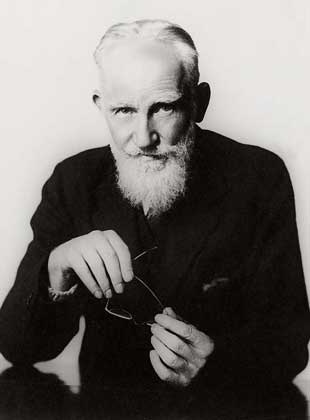
Today is the birthday of English playwright George Bernard Shaw. He was born in Dublin in 1856 and began his writing career as a journalist and theater critic in London. Eventually he began writing plays of his own, his most famous being Pygmalion (1912) -- the play upon which the musical My Fair Lady is based. In 1925, Shaw was awarded the Nobel Prize in literature.


What does all this have to do with the word "Ghoti"? To find out read on.

Wednesday, July 25, 2007

July 25: Retronym Day


Two seemingly unrelated events that happened on this date, 151 years apart, merge to illuminate the endless vitality of the English language.

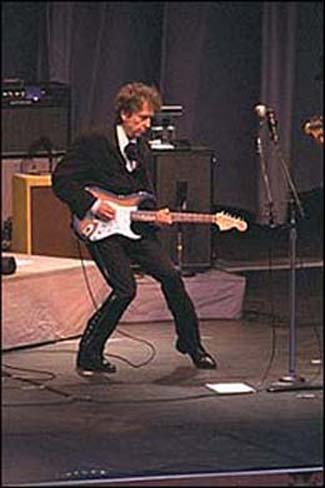
The first event took place on July 25, 1814. British engineer George Stephenson demonstrated the first steam locomotive. The second event took place on July 25, 1965 at the Newport, Rhode Island Folk Music Festival. For the first time ever, Bob Dylan performed with an electric guitar.

Besides the date, these two events both deal with inventions that were later improved upon or at least altered in some significant way. The alteration was such that the name also changed. For example, the word guitar was a fairly straight forward term for a stringed instrument, but the invention of the electric guitar required that a new adjective be attached to guitar to distinguish the plugged version from the unplugged version. The word used is acoustic, and it's an example of a class of words called retronyms. The word locomotive lead to the retronym steam locomotive when the electric and diesel locomotives came on the scene.

A retronym, as defined by the American Heritage Dictionary is: "A word or phrase created because an existing term that was once used alone needs to be distinguished from a term referring to a new development, as snail mail in contrast to e-mail.

The word was coined by Frank Mankiewicz, one-time press secretary for Robert F. Kennedy. He used existing Greek roots to create: retro (Greek, backwards) + nym (Greek, name).

Probably the largest collection of retronyms can be found at the web site of Barry Stiefel who has catalogued 112 examples. Here are a few examples that show the variety of categories that retronyms can fall under:

politics: absolute monarchy

communications: AM radio

family: biological parent

warfare: conventional weapons

computers: corded mouse

sports: natural turf (1)

Today's Challenge: A Retro By Any Other Nym
Given the name of the new idea or invention, see if you can name the retronym.

Example: Color television. Retronym: black and white television

1. surrogate mother
2. online journalism
3. New Coke
4. disposable diapers
5. microwave oven
6. digital camera
7. paperback book
8. nuclear warfare
9. New Testament
10. World War II

Quote of the Day: This paperback is very interesting, but I find it will never replace a hardcover book - it makes a very poor doorstop.--Alfred Hitchcock

Answers: 1. birth mother 2. print journalism 3. Classic Coke 4. cloth diapers 5. conventional over 6. film camera 7. hardcover book 8. conventional warfare 9. Old Testament 10. World War I

1 - Stiefel, Barry. Retronym: Aspiring To Be The World's Largest Collection Of English Language Retronyms (112 And Counting!)
http://www.barrystiefel.com/retronym.htm

Tuesday, July 24, 2007

July 24: Freeze Day

Today is the anniversary of the final performance of one of the most famous comedy duos of all time: Martin and Lewis.

Read more about what this historical event has to do with the English language.

Monday, July 23, 2007

July 23: Grand Slam Day

Today is the anniversary of Tiger Woods' victory at the 2000 British Open. Woods won by shooting a record 19 under par at the course in St. Andrews, Scotland.

Read more about what this historical event has to do with the English language.

Sunday, July 22, 2007

July 22: Spoonerism Day

Today is the birthday of the Reverend William Archibald Spooner, born in London in 1844.

To read more go to the following link: http://worddaze.blogspot.com/2006/07/july-22-spoonerism-day.html

Wednesday, May 30, 2007

May 30: Memorial Day

Today is the anniversary of the celebration of the first Memorial Day in 1868. American General John Logan, national commander of the Grand Army of the Republic, proclaimed May 30th a day "designated for the purpose of strewing with flowers or otherwise decorating the graves of comrades who died in defense of their country during the late rebellion, and whose bodies now lie in almost every city, village, and hamlet church-yard in the land."

It wasn’t until after World War I that the holiday became a national day, honoring not just the Civil War dead, but also those who served in any war.

On this day of remembrance a few mnemonic devices might be helpful. No, you can’t buy them in stores. A mnemonic device is a method of remembering something that is difficult to remember by remembering something that is easy to remember.

The word mnemonic is from the Greek goddess of memory and mother of the Muses, Mnemosyne.

In his book WASPLEG and Other Mnemonics, Bart Benne catalogs hundreds of mnemonic devices. To make things easy to remember, these mnemonic devices use different methods such as rhyme, acrostics, or acronyms. Another method is the nonsense sentence made up from the initial letters of what it is you are trying to remember. Here’s an example of a sentence that was created to remember the most important battles of Julius Caesar’s career:

Is Perpetual Zeal The Means?

I Ilerda
P Pharsalus
Z Zeta
T Thapsus
M Munda

Generations of school children have used the rhyme from Henry Wadsworth Longfellow’s poem "The Midnight Ride of Paul Revere" to remember the start date of the American Revolution:

Listen my children and you shall hear Of the midnight ride of Paul Revere,
On the eighteenth of April, in Seventy-five;
Hardly a man is now alive
Who remembers that famous day and year.

Rhyming couplets are helpful in remembering key dates in English history:

William the Conqueror, Ten Sixty-Six
Played on the Saxons oft-cruel tricks.

The Spanish Armada met its fate
In Fifteen Hundred and Eighty-Eight

The acronym "BIGOT" helps in remembering the Marine campaigns in the Pacific in World War II:

Bougainville
Iwo Jima
Guadalcanal
Okinawa
Tarawa

Another mnemonic device helps both soldiers and civilians remember the order of the major rank structures in the U.S. Army from lowest to highest ranking.

Privates Can’t Salute Without Learning Correct Military Command Grades:

Private,
Corporal,
Sergeant,
Warrant Officer,
Lieutenant,
Captain,
Major,
Colonel,
and General (2).

Today’s Challenge: Rhyme, Acrostics, and Acronyms Oh My!
Think of something you need to remember, or something that everyone should remember, and create your own mnemonic device.

Quote of the Day: Many a man fails as an original thinker simply because his memory is too good. --Friedrich Nietzsche

Sources:

1 - http://www.usmemorialday.org/order11.html

2 - Benne, Bart. WASPLEG and Other Mnemonics. Dallas: Taylor Publishing Company, 1988.

Wednesday, May 23, 2007

May 23: Sleep-in Day

Today is the birthday of Austrian physician Franz Mesmer (1734-1815) who discovered animal magnetism and whose work influenced the development of hypnosis. Animal magnetism was the term used to describe the mysterious magnetic powers that Mesmer claimed he could control to cure ailments. He did several public demonstrations of his art, but was pressured to leave Vienna by the medical community. He moved to Paris to continue his work, but in 1784 a scientific panel examined his practices and proclaimed that they had no basis in science.

Mesmer died in Switzerland in 1815, but thirty years after his death Scottish physician James Braid adapted Mesmer’s ideas and invented the procedure known as hypnosis. Braid also coined the terms hypnotism, hypnotize, and hypnotist (1).

Although Franz Mesmer is hardly a household name, he has become a part of the English lexicon. The verb mesmerize, meaning to 'spellbind or enthrall,' comes from Mesmer, his experiments, and his public demonstrations of his art. Mesmerize is another example of an eponym, a word derived from the name of a real or imaginary person (See Word Daze, March 28: Eponym Day).

James Braid might have used Mesmer’s name to describe his work; but instead, Braid turned to Greek mythology to describe his practice of inducing sleep in his patients. In Greek Mythology Hypnos was the god of sleep and the son of Zeus and Nyx, the goddess who personified night.

The Roman equivalent of Hypnos is Somnus, the source of the adjectives somniferous (inducing sleep) and somnolent (drowsy; sleepy). The Roman god of sleep also inspired the verb somnambulate, meaning to sleep walk.

The common word "sleep" as you might have guessed is from Old English.

Because sleep is an activity that we spend roughly one third of our life engaged in, it has been a frequent theme in literature. Probably the most famous example is Shakespeare’s Scottish play, where Macbeth, after he has killed King Duncan, rhapsodizes on the importance of sleep:

Methought I heard a voice cry 'Sleep no more!
Macbeth does murder sleep' -- the innocent sleep,
Sleep that knits up the raveled sleave of care,
The death of each day's life, sore labor's bath,
Balm of hurt minds, great nature's second course,
Chief nourisher in life's feast.
(Act II.ii.47-52)

Today’s Challenge: I’m Only Sleeping
Below are descriptions of literary characters (and one place) that come under the category of ‘sleep’ in The Oxford Dictionary of Allusions. See if you can identify the name of each character (2).

1. In Lewis Carroll’s Alice in Wonderland, he snoozed all through the tea party.

2. Washington Irving character who slept for twenty years before waking.

3. From the Bible, its east of Eden and the place where Cain was banished after he killed Abel.

4. A Shakespearean character who sleepwalks and is troubled by guilt after urging her husband to kill the king.

5. A princess from a fairy tale who has a spell put on her by a wicked fairy.

6. Another Shakespearean character, she was queen of the fairies. While she sleeps Oberon drops magic flower juice in her eyes.

7. The Roman god of dreams, son of Somnus.

8. A character from children’s stories who sprinkles a magical substance in their eyes to make them sleepy.

Quote of the Day: Good communication is a stimulating as black coffee, and just as hard to sleep after. –Ann Lindberg

Answers: 1. The Dormouse 2. Rip Van Winkle 3. The Land of Nod 4. Lady Macbeth5. Sleeping Beauty 6. Titania 7. Morpheus 8. The Sandman

1 - http://www.who2.com/franzantonmesmer.html

2 - Delahunty, Andrew, Sheila Dignen, and Penny Stock. The Oxford Dictionary of Allusions. Oxford: Oxford University Press, 2001.

Monday, May 21, 2007

May 21: Defenestration Day

It's not often that we can trace the precise day and year that a word was born, but one particularly interesting word was born on this day in 1618. The word word is defenestration which means: The act of throwing something or someone out the window.

Just before the beginning of The Thirty Years War, a war in which Roman Catholics and Protestants battled for political and religious power, Protestant nobles threw two members of the Roman Catholic royal council and their secretary from a window in Hradcany Castle in Prague. The good news concerning this momentous defenestration is that no one was hurt (1).

The word defenestration comes to us from Latin: de-, out + fenestra, window.

The word window comes to English via Old Norse vindauga: vindr, wind + auga, eye. Window is also a kenning, a figurative device used figurately in Old English and Old Norse where a compound expression is used in place of a noun. They are found frequently in poetic epics like Beowulf, but we also create them today. For example, here are some modern kennings: boob tube, fat pill, gas guzzler, and gut bomb.

One interesting new meaning of defenestration that has appeared recently on the Internet but not in the dictionary - yet - is: The act of removing a Windows operating system from a computer in order to install an alternative one (2).

Today's Challenge: A Verb of Your Own
Defenestrate is not a word you hear or read everyday, but it is an example of an action verb that relates to a very specific action, such as David Letterman defenstrating TVs, watermelons, or rotten eggs. Your task today is to create one or more new action verbs. Start by thinking of an action that we don't have a single verb for in English, such as "to sneeze quietly." You might also think of some type of action that is a reletively new activity, such as: to get stuck in a fast food drive through lane without enough money to pay for your meal. Once you have a definition, set your mind to coming up with one new verb to describe it.

Quote of the Day: Three-fourths of the people you will ever meet are hungering and thirsting for appreciation. Give it to them and they will love you. --Dale Carnegie

Sources:
1 - Ammer, Christine. Fighting Words: From War, Rebellion, and Other Combative Capers. New York: Paragon House, 1989.

2 - http://en.wiktionary.org/wiki/defenestration

Wednesday, May 16, 2007

May 16: Biographer's Day

Today is the anniversary of the first meeting between Samuel Johnson (1709-1784), the author of the landmark Dictionary of the English Language, and his biographer James Boswell (1740-1795). The two men met in Davies’s London bookshop in 1763, and established a relationship that would allow Boswell to produce what is recognized as the greatest biography ever written: The Life of Samuel Johnson, published in 1791.

The word biography is Greek (bio = life + graph = writing)

A number of words feature the graph root as it relates to writing. Here are words and definitions from English Vocabulary Quick Reference by Roger S. Crutchfield (1):

Autobiography: The story of one’s life written by oneself (auto-, self)

Autograph: Written or made with one’s own hand, as a signature (auto- self)Bibliography: A list of writings (biblio- book)

Cacography: Illegible handwriting (caco, poor)

Cryptography: The art or science of writing and deciphering secret codes (crypto, secret)

Dysgraphia: Impairment of the ability to write (dys-, impaired)

Hagiography: Biographies written about saints (hagio, holy)

Lexicography: The branch of linguistics dealing wit the writing or compiling of dictionaries (lex, word)

Orthography: Correct spelling (ortho, correct)

If you are a bit behind on your reading of biography, an excellent way to get caught up is to read the book 1,000 Years, 1,000 People: Ranking the Men and Women Who Shaped the Millennium. As the title suggests, this excellent book features 1,000 mini-biographies that are models of concise and clear prose. In addition, the authors created what they call the BioGraph System of ranking each of the 1,000 people. To lend some objectivity to their process, they created a list of five specific criteria and awarded points in each category. For example, number one on the list is Johannes Gutenberg with a score of 21,768 and number 1,000 is Andy Warhol with 1,000 points (2).

Criteria for Inclusion in the Top 1,000 People of the Millennium:

1. Lasting Influence 10,000

2. Effect on the sum total of wisdom and beauty in the world: 5,000

3. Influence on contemporaries: 5,000

4. Singularity of contribution: 3,000

5. Charisma: 2,000

Today’s Challenge: Biomania
Each name listed below has his or her biography in 1,000 Years, 1,000 People. Which one person in each of the pairs do you think is rated higher?

1. Ernest Hemingway or John Steinbeck?

2. Bob Dylan or T.S. Eliot?

3. Dwight D. Eisenhower or Winston Churchill?

4. Nicholas Copernicus or Galilieo Galilei?

5. William Shakespeare or Francis Bacon?

6. Charles Darwin or Isaac Newton?

7. Ludwig van Beethoven or Johann Sebastian Bach?

8. Leonardo Da Vinci or Pablo Picasso?

9. Albert Einstein or Thomas Alva Edison?

10. George Washington or Thomas Jefferson?

11. Karl Marx or Mohandas K. Gandhi?

12. Sigmund Freud or Carl Jung?

13. Adolph Hitler or Genghis Khan?

14. John Milton or Geoffrey Chaucer?

15. Marco Polo or Ferdinand Magellan?

16. John Calvin or Martin Luther?

17. Charles Dickens or Fyodor Dostoyevsky?

18. Alexander Graham Bell or Marie Curie?

19. Joseph Stalin or Niccolo Machiavelli?

20. Susan B. Anthony or Eleanor Roosevelt?

Quote of the Day: Be not afraid of greatness: some are born great, some achieve greatness, and some have greatness thrust upon them. –William Shakespeare in Twelfth Night.

Answers:
1. Ernest Hemingway 388 or John Steinbeck 901
2. Bob Dylan 888 or T.S. Eliot 720
3. Dwight D. Eisenhower 374 or Winston Churchill 38
4. Nicholas Copernicus 18 or Galilieo Galilei 4
5. William Shakespeare 5 or Francis Bacon 412
6. Charles Darwin 7 or Isaac Newton 6
7. Ludwig van Beethoven 10 or Johann Sebastian Bach 35
8. Leonardo Da Vinci 9 or Pablo Picasso 149
9. Albert Einstein 17 or Thomas Alva Edison 28
10. George Washington 22 or Thomas Jefferson 64
11. Karl Marx 14 or Mohandas K. Gandhi 12
12. Sigmund Freud 17 or Carl Jung 146
13. Adolph Hitler 20 or Genghis Khan 43
14. John Milton 53 or Geoffrey Chaucer 62
15. Marco Polo 66 or Ferdinand Magellan 42
16. John Calvin 69 or Martin Luther 3
17. Charles Dickens 70 or Fyodor Dostoyevsky 77
18. Alexander Graham Bell 74 or Marie Curie 75
19. Joseph Stalin 82 or Niccolo Machiavelli 40
20. Susan B. Anthony 139 or Eleanor Roosevelt 141

Sources:
1 – Crutchfield, Roger S. English Vocabulary Quick Reference. Leesburg, VA: LexaDyne Publishers, Inc., 1999.

2 - Gottlieb, Agnes Hooper, Henry Gottlieb, Barbara Bowers, and Brent Bowers. 1,000 Years, 1,000 People: Ranking the Men and Women Who Shaped the Millennium. New York: Kodansha International, 1998.

Tuesday, May 15, 2007

May 15: Beatles' Trivia Day

What do Jesus Christ, San Francisco, and a Russian spacecraft have in common? The answer is: The Beatles, who released their last album, Let It Be, in the United States on this date in 1970.

Beatitudes
The story of this odd threesome begins with Jesus Christ’s Sermon on the Mount where he issued his Beatitudes (from Latin beatitudo for 'happiness'). These statements are found in the Gospels of Matthew and Luke, and each begins with the word Blessed ( or Happy), as in "Blessed are the peacemakers for they will be called the children of God."

San Francisco
Flash forward to the West Coast in the 1950s. A group of young writers and artists attempt to rattle the conventional cages of their elders. Through self-expression and social protest they make a name for themselves, and one of them, American writer Jack Kerouac, coins the term beat generation in 1952. As cited in Twentieth Century Words, Kerouac associated the word beat with beatitude: "Beat means beatitude, not beat up."

Sputnik
Five years later, the Russians shock the world with the launch of the first artificial earth satellite. They call their satellite Sputnik, meaning ‘traveling companion.’ When news of the satellite’s launch on October 4, 1957 hits the newspapers, this Russian word is instantly absorbed into the English lexicon.

In 1958, San Francisco columnist Herb Caen blends the ‘beat generation’ with ‘Sputnik’ to create beatnik, a catchy term to describe young bohemians like Jack Kerouac.

Two years later across the Atlantic, a fledging group of musicians from Liverpool, England settle on the name Beatles. Despite John Lennon’s claim that the name came to him in a vision of a man riding on a flaming pie, it appears more likely that the name was influenced by one of John’s favorite bands, Buddy Holly and the Crickets. Looking for something catchy, they originally used Beetles, but no doubt the pun value of ‘beat’ got the better of them, influencing them to become the Beatles with an A.

Unlike Sputnik, the British band’s name did not become an instant household word. Their launch had to wait until 1963 when Beatlemania became first a British epidemic and later, in 1964, an American and worldwide pandemic (1).

In 1970, however, the world mourned as the Beatles came crashing to earth. John, Paul, George, and Ringo dissolved what was without a doubt the most popular, successful, and influential band of all time.

Even though decades have passed since the breakup of the Beatles, there is no waning of the passion for their music; for example, in the year 2000, 30 years after their breakup, the Beatles’ greatest hits CD Beatles 1 hit number one on the Billboard Album Charts. For Beatles fans, the term Beatles trivia is a contradiction in terms. For them reading about and listening to the Beatles is anything but a trivial pursuit. For the Beatle fan, knowledge about the Beatles is just as important as any other category of E.D. Hirsh’s Dictionary of Cultural Literacy.

The word trivia has an interesting history in its own right that relates to is roots. Originating from the Latin trivialis, it is made up of tri meaning three and via meaning roads. What do three roads have to do with the modern sense of ‘unimportant tidbits of information’? Where else than at the crossroads would common people meet to exchange weather reports, small talk, and gossip?

Today’s Challenge: Don’t Call It Trivia
See if you can answer the vital Beatles questions below.

1. What poet, read during his childhood, did John Lennon credit with his creative wordplay in such songs as "I Am the Walrus"?

2. What solo album by Paul McCartney got its title from John Lennon’s story about the vision that inspired the naming of the Beatles?

3. Although Let It Be was the last album release by the Beatles, it was not the last that they recorded; what was the last album they recorded together?

4. What Beatle catchphrase did Paul McCartney’s father object to because of its non-standard usage?

5. What is the name of the record label created by the Beatles that went to court to fight the dilution of its trademark against a computer company?

6. What Beatle song is the anthem for frustrated writers?

7. What was the title of the first book published by John Lennon in 1964?

8. Which Beatle said, "I am alive and well and concerned about the rumors of my death. But if I were dead, I would be the last to know"?

9. Which Beatle said, "I hardly ever alter anything because I'm selfish about what I write, or big-headed about it. Once I've written it, I like it. And the publisher sometimes says, 'Should we leave this out, or change that?' and I fight like mad, because once I've done it I like to keep it. But I always write it straight off. I might add things when I go over it before it's published, but I seldom take anything out. So it is spontaneous"?

10. What Beatles’ song and movie got its title from a Ringo Star malapropism?

Quote of the Day: Why tell me why did you not treat me right? Love has a nasty habit of disappearing overnight! -- from the Beatles’ song "I’m Looking Through You."

Answers: 1. Lewis Carroll 2. Flaming Pie 3. Abbey Road 4. yeah, yeah, yeah 5. Apple Records 6. Paperback Writer 7. In His Own Write 8. Paul McCartney 9. John Lennon 10. A Hard Day's Night

Sources:
1- Ayto, John. Twentieth Century Words. Oxford: Oxford University Press, 1999.

Monday, May 14, 2007

May 14: Native American Words Day

Today is the anniversary of the founding of Jamestown, the first English speaking settlement in the New World. Three ships arrived on May 14, 1607 at a wooded island island in the James River. Life was not easy for these English settlers, and they almost succumbed to the same fate as an earlier group of settlers at Roanoke. That group had landed off the coast of North Carolina in 1584 and by 1590 had vanished without a trace. The settlers at Jamestown were more lucky; in 1610 Lord De La Warr (Delaware) arrived in time to resupply the 35 remaining colonists (1, 2).

The natives peoples of what is now the United States spoke hundreds of different languages, and although English has never been declared the official language of the United States, it certainly has supplanted all native languages. There are, however, a few words from the native peoples that were adopted into English; most of these were adopted in the period of early colonization by settlers like those at Jamestown. For the most part these words are from the Algonquian dialects and reflect Indian names for plants and animals or unique artifacts and social practices of Indian life.

The word moose is one example to describe the very large northern deer. Another example is succotash which originates from the Algonquian word meaning 'cooked corn kernels.'

Today's Challenge: New World Words
Below are examples of native words in their original spellings. See if you can detect the modern English equivalents of these words.

1. isquoutersquash
2. ocheck
3. arathkon
4. segakw
5. pakan
6. pawcohiccora
7. aposum
8. mohkussin (3)

Quote of the Day: Power is sweet, it is a drug, the desire for which increases with habit. --Bertrand Russell

Answers: 1. squash 2. woodchuck 3. Raccoon 4. skunk 5. pecan 6. hickory 7. opossum 8. moccasin

1 - McCrum, Robert, William Cran, and Robert MacNeil. The Story of English. New York: Penguin Books, 1987.

2 - Flavell, Linda and Roger. The Chronology of Words and Phrases. London: Kyle Cathie Limited, 1999.

3 - Success with Words: A Guide to the American Language (Reader's Digest). Pleasantville: The Reader's Digest Association, Inc., 1983.

Friday, May 11, 2007

May 11: Classic Movie Lines Day

The Academy of Motion Picture Arts and Sciences (AMPAS) was founded on this day in 1927. The mission of this professional organization is the advancement of the arts and sciences of motion pictures.

The AMPAS is best known for its annual ceremony the Academy Awards, popularly known as the Oscars. By the time of the first Academy Awards ceremony in 1928, movies had become a vital part of the culture.

Below are examples of movie-related words that entered the language as motion pictures evolved into a staple of modern life:

cinema (1909)

feature film (1911)

movie (1912)

talkie (1913)

movie house (1914)

movie theater (1915)

movie star (1914)

Hollywood (1926)

flick (1926)

Oscar (1936) (1)

In an essay entitle "Yadda Yadda Doo" from his book The Way We Talk Now, Geoffrey Nunberg compares the lifespan of movie lines to television catch phrases. According to Nunberg, television catch phrases come and go, like the shows from which they spawn. But movie lines have a longer life, and when they enter the language, they take on a life of their own; for example, "a lot of people use the line ‘We don’t need no stinkin’ badges,’ but not many of them could identify it as a quote, or actually a misquote, from The Treasure of the Sierra Madre (2). Like dead metaphors, movie lines become imbedded in the cultural vocabulary of all of us.

Today’s Challenge: "We’ll Always Have the Movies."

The following classic movie lines are from the American Film Institute’s list of the top 100 Movie Lines of All Time. See if you can identify the movie that goes with each line (3).

1. #11 What we've got here is failure to communicate.

2. #16 They call me Mister Tibbs!

3. #29 You can't handle the truth!

4. #32 Round up the usual suspects.

5. #50 Houston, we have a problem.

6. #64 Gentlemen, you can't fight in here! This is the War Room!

7. #95 Carpe diem. Seize the day, boys. Make your lives extraordinary.

8. #100 I'm king of the world!

Quote of the Day: Mama always said life was like a box of chocolates. You never know what you're gonna get. --Forrest Gump

Answers: 1. Cool Hand Luke 2. In the Head of the Night 3. A Few Good Men 4. Casablanca 5. Apollo 13 6. Dr. Strangelove 7. Dead Poets' Society 8. Titanic

1 Ayto, John. Twentieth Century Words. Oxford: Oxford University Press,1999.

2 Nunberg, Geoffrey. The Way We Talk Now. New York: Houghton Mifflin Company, 2001.

3. American Film Institute http://www.afi.com/tvevents/100years/quotes.aspx

Thursday, May 10, 2007

May 10: Words from Winston Churchill Day

On this day in 1940, Winston Churchill took the office of British Prime Minister, replacing Neville Chamberlain. On the same day Hitler began his Western offensive, storming into Holland and Belgium with 136 German divisions. By June 15, 1940, the Germans were in Paris, and the fate of the English speaking people and civilization itself was in the hands of Sir Winston Churchill.

Through his leadership, his optimistic voice, and, possibly most important, his words, Churchill helped the British to rally against the dark threat of Nazi Germany.

Three days after taking the helm of Prime Minister, Churchill entered the House of Commons to a lukewarm reception. In a brief speech, Churchill demonstrated the indomitable spirit that would continue to buoy the spirits of the British people as they faced the threat of Nazi domination.

Here is an excerpt from his address:

I say to the House as I said to ministers who have joined this government, I have nothing to offer but blood, toil, tears, and sweat. We have before us an ordeal of the most grievous kind. We have before us many, many months of struggle and suffering.

You ask, what is our policy? I say it is to wage war by land, sea, and air. War with all our might and with all the strength God has given us, and to wage war against a monstrous tyranny never surpassed in the dark and lamentable catalogue of human crime. That is our policy.

You ask, what is our aim? I can answer in one word. It is victory. Victory at all costs - Victory in spite of all terrors - Victory, however long and hard the road may be, for without victory there is no survival.

Let that be realized. No survival for the British Empire, no survival for all that the British Empire has stood for, no survival for the urge, the impulse of the ages, that mankind shall move forward toward his goal.

I take up my task in buoyancy and hope. I feel sure that our cause will not be suffered to fail among men. I feel entitled at this juncture, at this time, to claim the aid of all and to say, "Come then, let us go forward together with our united strength."

For the complete text of Churchill’s address, visit http://www.historyplace.com/speeches/churchill.htm

According to Gretchen Ruben, author of Forty Ways to Look at Winston Churchill, the Prime Minster’s greatest strength was his genius with words. Churchill clearly understood the power of words. He once said, "Words are the only things which last forever." In fact, his words live on; no other author, for example, has more quotations in Bartlett’s Familiar Quotations.

President John F. Kennedy said, "Churchill mobilized the English language and sent it into battle."

He had an expansive vocabulary, and although he sometimes used anachronistic words he knew the right time to employ the plain, short Anglo-Saxon lexicon; he said, "Short words are best, and the old words when short are best of all" (1).

In addition to his eloquence and excellent diction, Churchill also is memorable for his ability to use humor when appropriate. One classic example involves English grammar. When an editor objected to his ending a sentence with a preposition, Churchill wrote the following note in the margin: "This is the sort of pedantry up with which I will not put."

Today’s Challenge: Churchill: Man or Myth?
Read the following quotes below. Some are often attributed to Churchill, but in reality were never said by him. See if you can tell Churchill's true words from his false.

1. "From Stettin in the Baltic to Trieste in the Adriatic an iron curtain has descended across the Continent."

2. "The only traditions of the Royal Navy are rum, sodomy and the lash."

3. "If you're not a liberal when you're 25, you have no heart. If you're not a conservative by the time you're 35, you have no brain."

4. "Never in the field of human conflict was so much owed by so many to so few."

5. "All this contains much that is obviously true, and much that is relevant; unfortunately, what is obviously true is not relevant, and what is relevant is not obviously true."

6. "Never give in--never, never, never, never, in nothing great or small, large or petty, never give in except to convictions of honour and good sense. Never yield to force; never yield to the apparently overwhelming might of the enemy.''

7. "We shall fight on the beaches. We shall fight on the landing grounds. We shall fight in the fields, and in the streets, we shall fight in the hills. We shall never surrender!"

8. Lady Astor: "Winston, if I were your wife I'd put poison in your coffee." Winston: "Nancy, if I were your husband I'd drink it."

Quote of the Day: A speech is like a symphony. It may have three movements but must have one dominant melody. –Winston Churchill

Answers:
1. From a speech Churchill gave on March 5, 1946 Westminster College in Fulton, Missouri.
2. Not Churchill. Said by Churchill's assistant, Anthony Montague-Browne.
3. Not Churchill
4. Speech made in the House of Commons as the Battle Britain peaked on August 20, 1940.
5. Not Churchill
6. Churchill gave this extremely short speech at his old school, Harrow on October 29, 1941.
7. Churchill’s Speech about Dunkirk given in House of Commons June 4, 1940. 8. Vintage Winston Churchill

1 - Rubin, Gretchen. Forty Ways to Look at Winston Churchill. New York: Random House, 2003.

Wednesday, May 09, 2007

May 9: Turn Off the TV Day

Today is the anniversary of a memorable speech by Newton Minow, chairman of the Federal Communications Commission, to the National Association of Broadcasters. The year was 1961, and Newton did not have many good things to say about commercial television. His speech, where he called television "a vast wasteland," sparked a national debate about the quality, or lack there of, of television programming.

Since Minow’s speech, television has been called the idiot box and the boob tube. Television viewers have become couch potatoes (1979), and the number of channels has grown to more than 500, but "nothing is on."

Here's an excerpt from Minow's indictment:

But when television is bad, nothing is worse. I invite you to sit down in front of your television set when your station goes on the air and stay there without a book, magazine, newspaper, profit and loss sheet or rating book to distract you -- and keep your eyes glued to that set until the station signs off. I can assure you that you will observe a vast wasteland.

You will see a procession of game shows, violence, audience participation shows, formula comedies about totally unbelievable families, blood and thunder, mayhem, violence, sadism, murder, western bad men, western good men, private eyes, gangsters, more violence, and cartoons. And, endlessly, commercials -- many screaming, cajoling, and offending. And most of all, boredom. True, you will see a few things you will enjoy. But they will be very, very few. And if you think I exaggerate, try it.

To see the entire speech go to: http://www.americanrhetoric.com/speeches/newtonminow.htm

While Minow’s phrase "a vast wasteland" caught on, his speech certainly did not discourage the growth of television sets in American homes. In an age of reality television, satellite television, and 24-hour sports and cable new stations, television is more popular than ever.

One question that has been asked by educators since the advent of commercial television is: What is the relationship between television viewing and reading? One particularly interesting answer to this question was given by Norman Mailer in the January 23, 2005 edition of Parade Magazine. In the article Mailer says that the one thing that he would do to change America for the better would be to get rid of television commercials. Mailer argues that the constant interruptions of commercials disrupt our children’s ability to read effectively by denying them something that is necessary for reading: concentration.

Here is an excerpt from Mailer’s Parade essay:

Television is seen as the culprit, since the ability to read well is directly related to one’s ability to learn. If it is universally understood that the power to concentrate while reading is the royal road to knowledge, what may not be perceived as clearly is how much concentration itself is a species of psychic strength. It can be developed or it can go soft in much the manner that body muscle can be built up or allowed to go slack. The development of physical ability is in direct relation to use. Reading offers its analogy. When children become interested in an activity, their concentration is firm—until it is interrupted. Sixty years ago, children would read for hours. Their powers of concentration developed as naturally as breathing. Good readers became very good readers, even as men and women who go in for weight-lifting will bulk up. The connection between loving to read and doing well in school was no mystery to most students . . . . On the major networks, the amount of time given to commercials and other promotional messages increased by 36 percent from 1991 to 2003. Each of the four major networks now offers 52 minutes of commercials in the three hours from 8 p.m. to 11 p.m. every day. It is equal to saying that every seven, 10 or 12 minutes, our attention to what is happening on the tube is cut into by a commercial. It is as bad for most children’s shows. Soon enough, children develop a fail-safe. Since the child knows that any interesting story will soon be amputated by a kaleidoscope of toys, food, dolls, clowns, new colors and the clutter of six or seven wholly different products all following one another in 10-, 20- and 30-second spots all the way through a three-minute break, the child also comes to recognize that concentration is not one’s friend but is treacherous. For soon enough, attention will be turned inside out. The need to get up and move can become a frantic if routine response for highly keyed children. Other kids, stupefied by the onslaught of a quick series of ads that have nothing to do with each other, suffer a dire spiritual product—stagnation. They sit on the couch in a stupor, they eat and drink, and alarms are sounded through the nation. Our children are becoming obese.

To see the complete text of Mailer's article go to: http://www.parade.com/articles/editions/2005/edition_01-23-2005/featured_0

Today’s Challenge: Trivial TV Tidbits
It should be noted that no one on the Word Daze staff has owned a television since 1992. In fact nowhere in the palatial offices of Word Daze Plaza is there anything resembling an idiot box. Try your hand at the questions below, and congratulate yourself if you get none of them correct.

1. What word uttered repeatedly by Homer Simpson was included in the Oxford English Dictionary in 2001?

2. Who was on the cover of the first edition of TV Guide, published on April 3, 1953?

3. What is the most watched TV episode of all time?

4. What TV Theme song hit number one on the Billboard charts in 1976?

5. "I’ll see you all in the cafeteria." Is the final line of what TV series?

6. What country watches the most TV?

7. What was the first image shown on television?

8. What was the first TV series to broadcast a rerun?

9. What television series features a boat named after Newton Minow?

Quote of the Day: Television is a new medium. It's called a medium because nothing is well-done. --Fred Allen

Grobman, Paul. Vital Statistics: An Amazing Compendium of Factoids, Minutiae, and Random Bits of Wisdom. New York: Plume Books, 2005.

Answers: 1. "Doh" 2. Desi Arnez, Jr. 3. MASH 4. Welcome Back, Kotter 5. Seinfled 6. Japan (an average of 4 hours, 29 minutes) 7. A statue of Felix the Cat 8. Dick Tracy 9. Gilligan's Island (the S.S. Minow)

Tuesday, May 01, 2007

May 1: Paradox Day

Today is the anniversary of the 1961 publication of the Joseph Heller novel Catch-22. In the novel the anti-hero Captain Yossarian serves in the United States Air Force on a Mediterranean island near Italy during World War II. In order to survive the war, Yossarian attempts to avoid flying on the dangerous bombing missions. His efforts are thwarted, however, by the paradoxical rule called Catch-22, explained in the following excerpt from the novel:

There was only one catch and that was Catch-22, which specified that a concern for one’s own safety in the face of dangers that were real and immediate was the process of a rational mind. Orr was crazy and could be grounded. All he had to do was ask; and as soon as he did he would no longer be crazy and would have to fly more missions. Orr would be crazy to fly more missions and sane if he didn’t, but if he was sane he had to fly them. If he flew them he was crazy and didn’t have to; but if he didn’t want to he was sane and had to. Yossarian was moved very deeply by the absolute simplicity of this clause of Catch-22 and let out a respectful whistle.

According to Twentieth Century Words, the expression catch-22 to refer to "a supposed law or regulation containing provisions which are mutually frustrating" began to gain widespread use in the 1970s after the release of a film version of the novel in 1970 (1). The fact that the title of a novel took on a life of its own and developed a generic meaning in the language is a unique occurrence. For example, even a person who has never heard of Yossarian or Heller’s novel might be aware of the expression. After a job interview, for example, a frustrated teenager might return home and tell his mother: "They won’t hire me unless I have experience, but how can I get experience if no one will hire me? I’m caught in a catch-22."

A catch-22, then, is a 'damed if you do, damed if you don't' type of situation. It's a no-win situation; a chicken and egg problem that traps you in a double bind of circular logic wrapping around a conundrum. In other words, it's a kind of paradox.

A paradox is a statement that seems to contradict itself, yet is true. In a paradox, truth and falsehood collide and synthesize into wisdom. Great quotes, great poetry, and great speeches of all kinds are full of paradox. The etymology of paradox is Greek paradoxon meaning conflicting with expectation. For an excellent anthology of paradoxes, get the book Oxymoronica: Paradoxical Wit and Wisdom from History's Greatest Wordsmiths. In this book Dr. Mardy Grothe has collected over one thousand examples of paradoxical quotes, including the following one from Joseph Heller: When I grow up I want to be a little boy.

Today’s Challenge: True Lies
The paradoxical quotes below are from classic literary authors. See if you can guess the author of each quote:

1. Parting is such sweet sorrow.

2. I must be cruel only to be kind.

3. Even amongst men lacking all distinction he inevitably stood out as a man lacking more distinction than all the rest, and people who met him were always impressed by how unimpressive he was.

4. Several excuses are always less convincing than one.

5. But it’s the truth even if it didn’t happen.

6. War is peace. Freedom is slavery. Ignorance is strength.

7. I’m quite illiterate, but I read a lot.

8. The best place to hide anything is in plain view.

9. He is an honorable, obstinate, truthful, high-spirited, intensely prejudiced, perfectly reasonable man.

10. The handsome gifts that fate and nature lend us most often are the very ones that end us.

Quote of the Day: If you want to be true to life, start lying about it. -- John Fowles

1. William Shakespeare 2. William Shakespeare 3. Joseph Heller 4. Aldous Huxley 5. Ken Kesey 6. George Orwell 7. J. D. Salinger 8. Edgar Allen Poe 9. Charles Dickens 10. John Fowles

Sources:
1- Ayto, John. Twentieth Century Words. Oxford: Oxford University Press, 1999.

2-Grothe, Mardy. Oxymoronica: Paradoxical Wit and Wisdom from History's Greatest Wordsmiths. New York: HarperCollins, 2004.